
Machining Inconel gate valves presents a range of challenges due to the material properties of Inconel, a family of nickel-chromium-based superalloys known for their high strength, corrosion resistance, and ability to retain their properties at elevated temperatures. Inconel is often used in extreme environments like aerospace, marine, and
power generation, but these same properties that make it ideal for demanding applications also make it difficult to machine.
Here are the detailed challenges involved in machining Inconel gate valves:
- Material Hardness and Strength
- Challenge: Inconel’s high strength and hardness, particularly at elevated temperatures, make it difficult to cut. Traditional tools can wear out quickly, and maintaining precise tolerances is challenging.
- Solution: Use of advanced cutting tools like carbide or ceramic inserts, which are more resistant to wear and heat. Employing high-rigidity machine setups and precision control is also necessary to maintain accuracy.
- Work Hardening
- Challenge: Inconel tends to work harden rapidly during machining, which means that the surface of the material becomes harder as it is cut. This can lead to difficulties in cutting, increased tool wear, and even tool breakage if not managed properly.
- Solution: Machining strategies should include light but consistent cuts to minimize work hardening. Using a proper coolant and avoiding re-cutting chips can also help reduce work hardening effects.
- Heat Generation
- Challenge: The high nickel content in Inconel alloys leads to significant heat generation during machining. Excessive heat can cause thermal expansion, affect tolerances, and further accelerate tool wear.
- Solution: High-pressure coolant systems should be used to efficiently remove heat from the cutting zone. Choosing the right cutting speed and feed rates is crucial to minimize heat buildup.
- Tool Wear and Tool Life
- Challenge: The combination of high strength, hardness, and heat generation results in rapid tool wear. This can lead to frequent tool changes, reduced productivity, and increased costs.
- Solution: Using coated carbide or ceramic tools with high wear resistance, and employing optimized machining parameters, can extend tool life. Continuous monitoring of tool condition and timely tool changes are necessary to maintain quality.
- Surface Finish and Tolerances
- Challenge: Achieving the required surface finish and maintaining tight tolerances on Inconel gate valves is difficult due to the material’s toughness and tendency to work harden. Poor surface finish can impact the valve’s sealing capabilities and overall performance.
- Solution: Precision machining with proper cutting tools, correct feed and speed, and the use of appropriate finishing processes (such as grinding or polishing) are essential. Ensuring the machine is rigid and stable reduces vibrations, contributing to better surface finish.
- Machining Time and Cost
- Challenge: The challenges mentioned above contribute to longer machining times, which can significantly increase manufacturing costs. The need for specialized tools and processes also adds to the expense.
- Solution: Efficient process planning and optimization are key. This might include selecting the best machining techniques, optimizing cutting parameters, and potentially using advanced manufacturing methods like electrical discharge machining (EDM) for certain complex features.
- Residual Stresses
- Challenge: The machining process can introduce residual stresses into Inconel, which can affect the dimensional stability of the gate valve during service, especially in high-temperature environments.
- Solution: Post-machining stress-relief treatments, such as heat treatment, can be applied to reduce residual stresses. Careful control of machining parameters to minimize cutting forces also helps.
- Tool Geometry and Cutting Strategies
- Challenge: Standard tool geometries may not be effective for machining Inconel, leading to poor performance and reduced tool life. Additionally, inappropriate cutting strategies can exacerbate problems like work hardening and heat buildup.
- Solution: Custom tool geometries specifically designed for Inconel can be used. Employing appropriate cutting strategies, such as high-speed machining or the use of high-feed rates with small depths of cut, can improve results.
- Chip Control
- Challenge: Inconel tends to produce tough, stringy chips that can be difficult to control and may cause problems like re-cutting, tool breakage, or damage to the workpiece.
- Solution: Using chip breakers on cutting tools and optimizing feed rates can help manage chip formation. Ensuring proper coolant flow helps to wash away chips effectively.
- Environmental and Safety Considerations
- Challenge: The use of high-pressure coolant systems, specialized cutting tools, and dealing with tough materials can pose environmental and safety challenges, particularly in terms of handling and disposal of coolants and chips.
- Solution: Implementing proper coolant management systems, safe handling procedures, and compliance with environmental regulations are necessary to mitigate these challenges.
Machining Inconel gate valves requires careful consideration of the material’s properties and the challenges they present. Success depends on the use of advanced tools and techniques, rigorous process control, and continuous optimization to balance productivity with quality.

Omega Metal Industries was tasked to machine these gigantic Inconel gate valves from one of Saudi’s top companies.
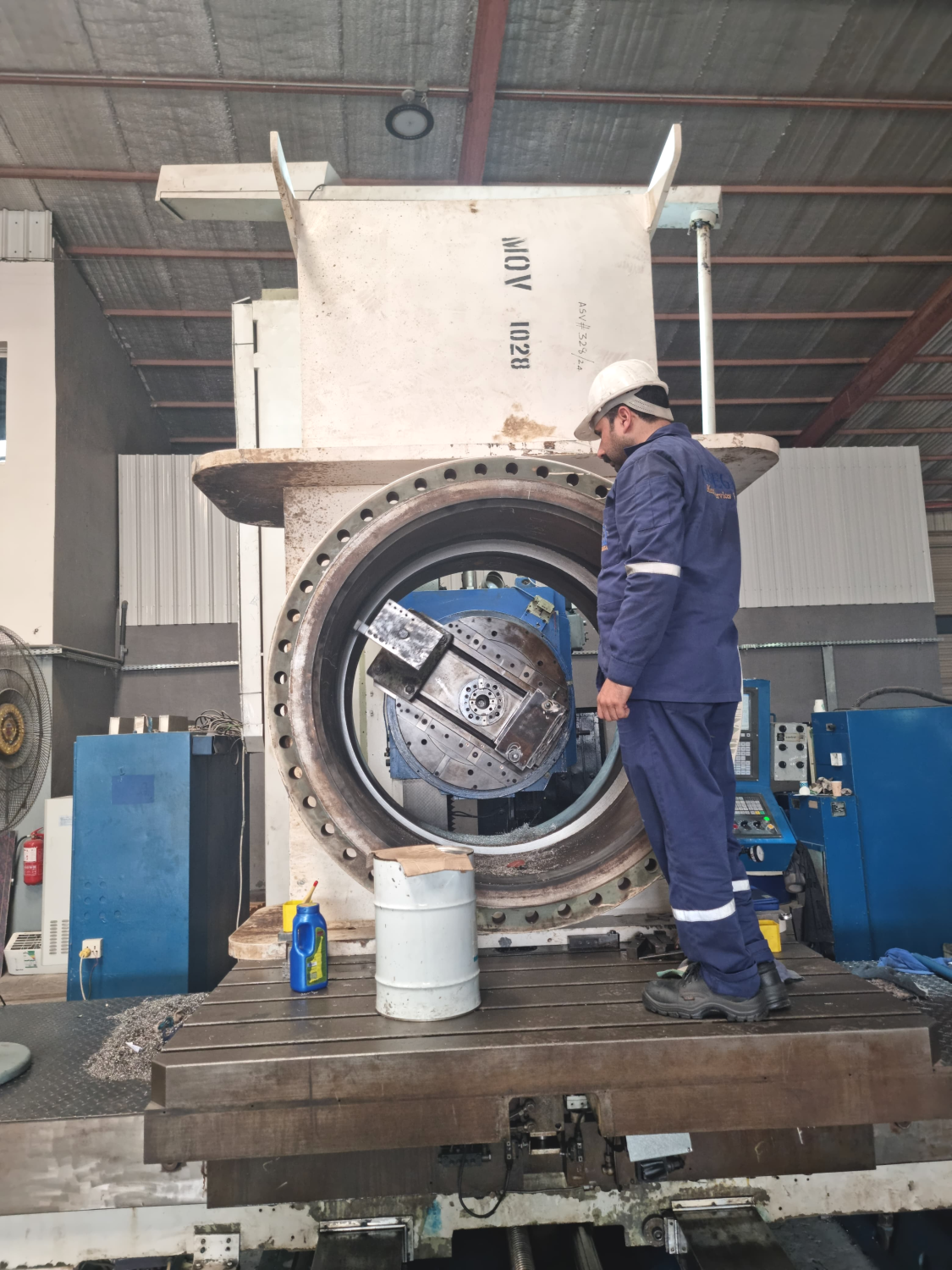
Our expert operator ensuring each intricate detail is carefully examined, to meet the customers expectations.
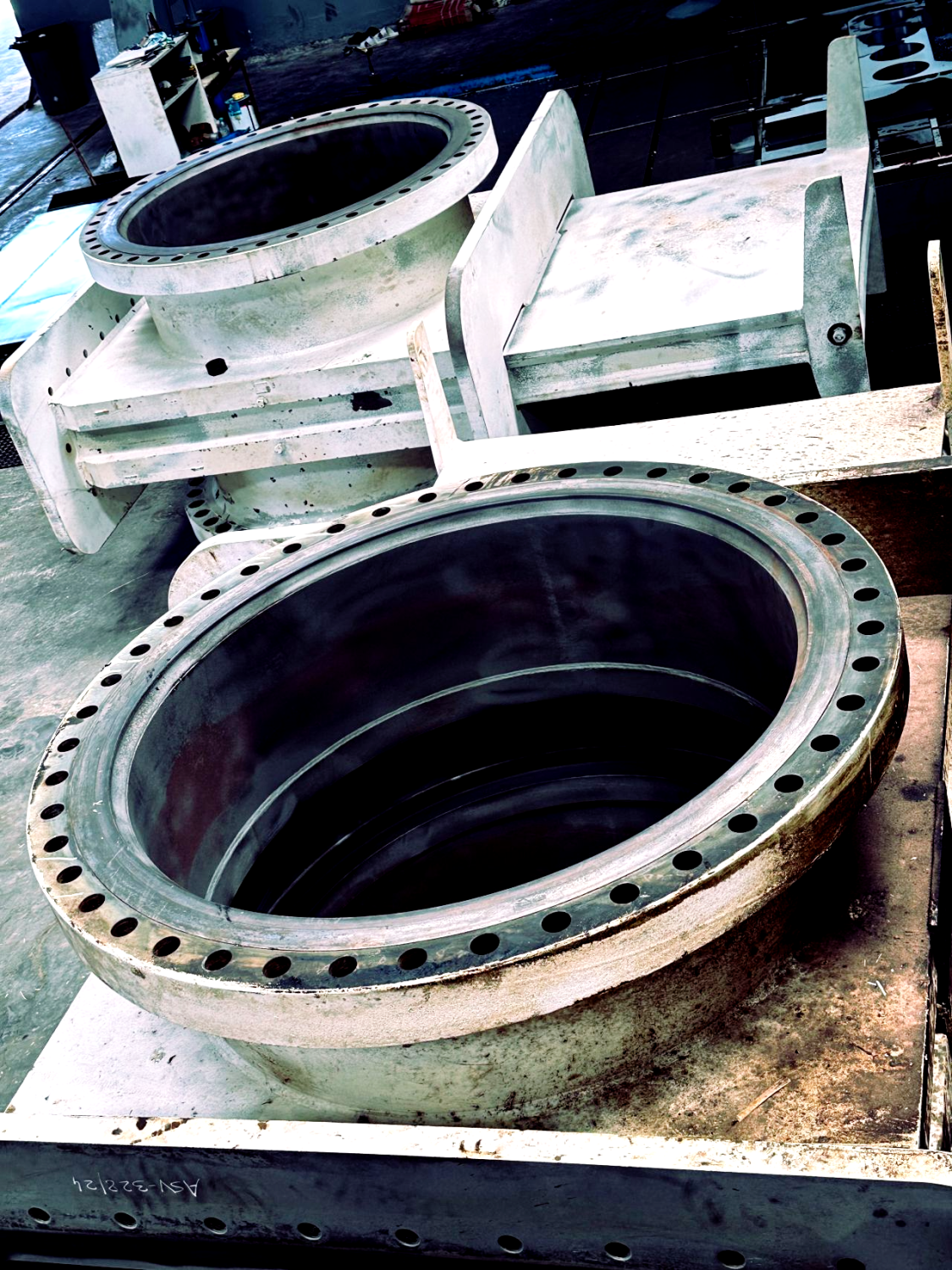
Omega Metal Industries and Omega Fluid Controls have the capability to service and repair very industrial components such as these valves.